Digital Health for Tuberculosis Detection, Adherence, and Treatment Outcomes: A Systematic Review
DOI:
https://doi.org/10.33479/jfmc.v4i2.177Keywords:
Digital Adherence, Digital Health, Technologies, Treatment Adherence, TuberculosisAbstract
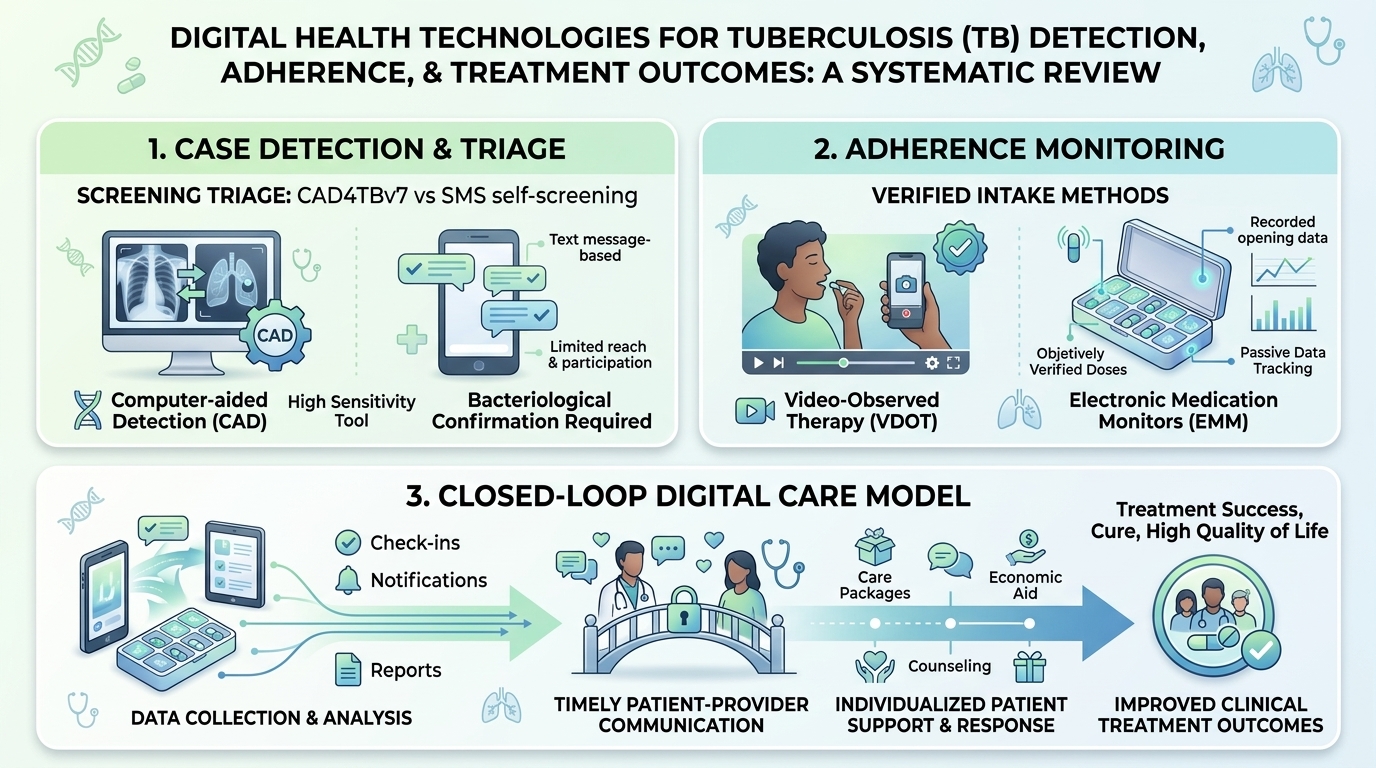
Digital health technologies are increasingly used across the tuberculosis (TB) care cascade, from case detection to treatment monitoring. However, evidence regarding their effectiveness in improving TB detection, adherence, and treatment outcomes remains inconsistent. This systematic review evaluated the effectiveness of digital health technologies across the TB care cascade and identified intervention characteristics associated with successful implementation. Eleven articles published between 2017 and 2026 met the predefined inclusion criteria and were synthesized narratively. The included studies comprised randomized controlled trials, cluster-randomized trials, diagnostic accuracy studies, and study protocols. Ten studies reported effectiveness outcomes, while one described the development of a digital intervention. Technologies evaluated included computer-aided detection, self-screening applications, electronic medication monitors, 99DOTS, video-observed therapy, ingestible medication sensors, mobile health applications, and digitally delivered economic support. Computer-aided detection showed good performance for TB triage, whereas text message-based self-screening achieved limited user participation. Video-observed therapy and ingestible sensors improved objective verification of medication intake. Electronic medication monitors produced inconsistent clinical outcomes, with greater benefits when integrated with two-way communication, active follow-up, patient support, and adequate connectivity. Mobile health applications and digital cash transfers combined with counselling also improved adherence and treatment outcomes. This review provides an integrated mapping of digital technologies across the TB care cascade while distinguishing technical, behavioural, and clinical outcomes. Digital health technologies may strengthen TB detection and treatment adherence, particularly when digital data trigger timely healthcare-provider responses and individualized patient support.
Downloads
Published
How to Cite
Issue
Section
License
Copyright (c) 2026 Sufiyatin Riski Adawiyyah, Eko Setiawan, Fauna Herawati

This work is licensed under a Creative Commons Attribution-ShareAlike 4.0 International License.