Evaluation Of Antihypertensive Drug Use On Therapy Effectiveness Based On Patient Characteristics And Adverse Drug Reactions
DOI:
https://doi.org/10.33479/jfmc.v4i2.159Keywords:
Adverse Drug Reactions, Hypertension, Naranjo Algorithm, Patient Characteristics, Therapy EffectivenessAbstract
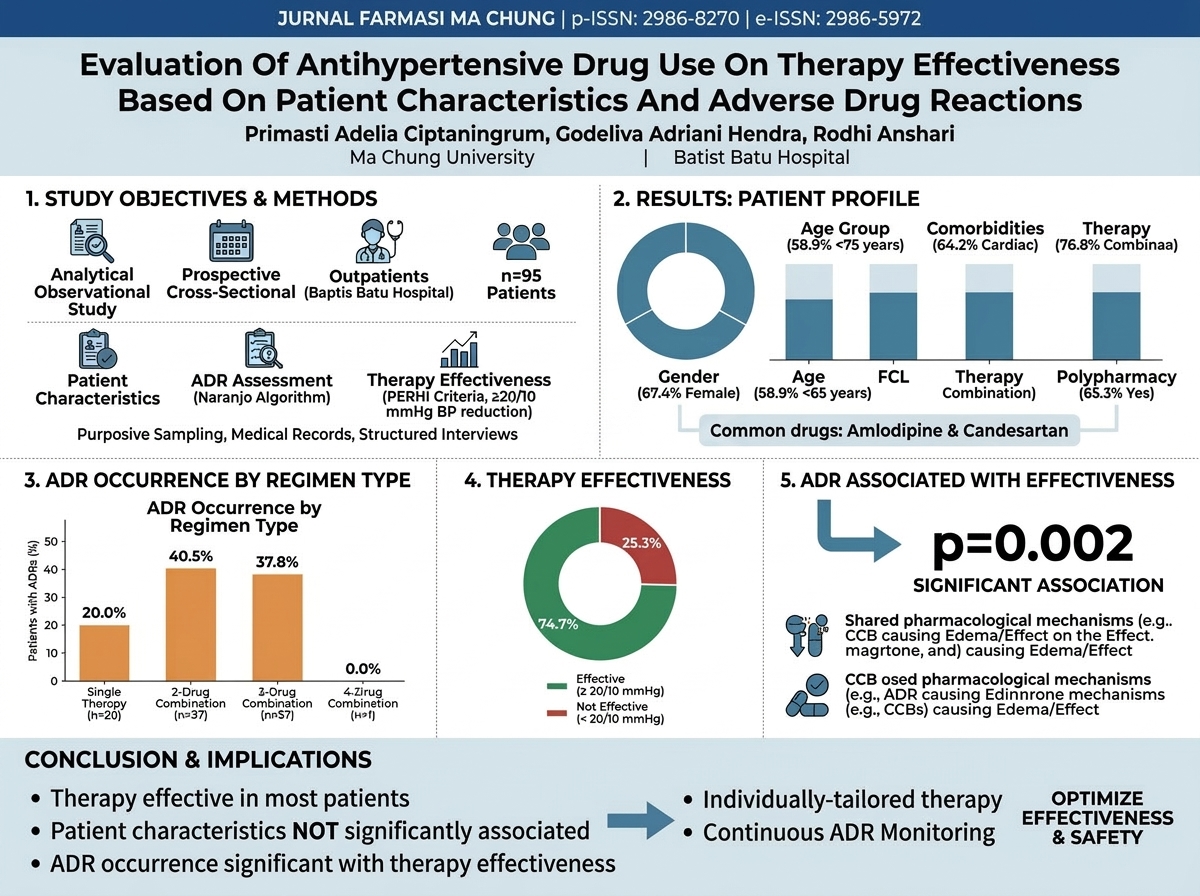
Hypertension is a chronic disease that requires long-term management to prevent cardiovascular complications, and antihypertensive therapy success is influenced by both patient characteristics and drug safety. This study aimed to describe patient characteristics, antihypertensive drug use, adverse drug reactions, and treatment effectiveness among outpatients at Baptis Batu Hospital. An analytical observational study with a prospective cross-sectional design was conducted using purposive sampling, yielding 95 eligible patients. Data were obtained from medical records and structured interviews; ADRs were assessed using the Naranjo Algorithm and Therapy effectiveness was defined as a reduction in blood pressure of ≥20/10 mmHg based on the PERHI (2021) criteria. Data were analyzed descriptively and using the Chi-Square test (α = 0.05). Most patients were female (67.4%), aged < 65 years (58.9%), receiving combination therapy (76.8%), and experiencing polypharmacy (65.3%), with amlodipine and candesartan the most frequently prescribed combination. Therapy was effective in 71 patients (74.7%), and ADRs occurred in 33 patients (34.7%). ADR occurrence was significantly associated with therapy effectiveness (p = 0.002). The study described patient characteristics, antihypertensive drug use, ADR occurrence, and therapy effectiveness among outpatients at Baptis Batu Hospital. ADR occurrence was significantly associated with therapy effectiveness (p = 0.002). These findings support individualized antihypertensive treatment and continuous ADR monitoring to optimize therapy effectiveness and safety.
Downloads
Published
How to Cite
Issue
Section
License
Copyright (c) 2026 Primasti Adelia Ciptaningrum, Godeliva Adriani Hendra, Rodhi Anshari

This work is licensed under a Creative Commons Attribution-ShareAlike 4.0 International License.