Comparative Standardization of Moringa oleifera L. Leaf Extracts: Evaluation of Maceration vs. Infusion Using Aqueous Solvent
DOI:
https://doi.org/10.33479/jfmc.v4i2.174Keywords:
Aquadest, Infusion, Maceration, Moringa Leaves, StandardizationAbstract
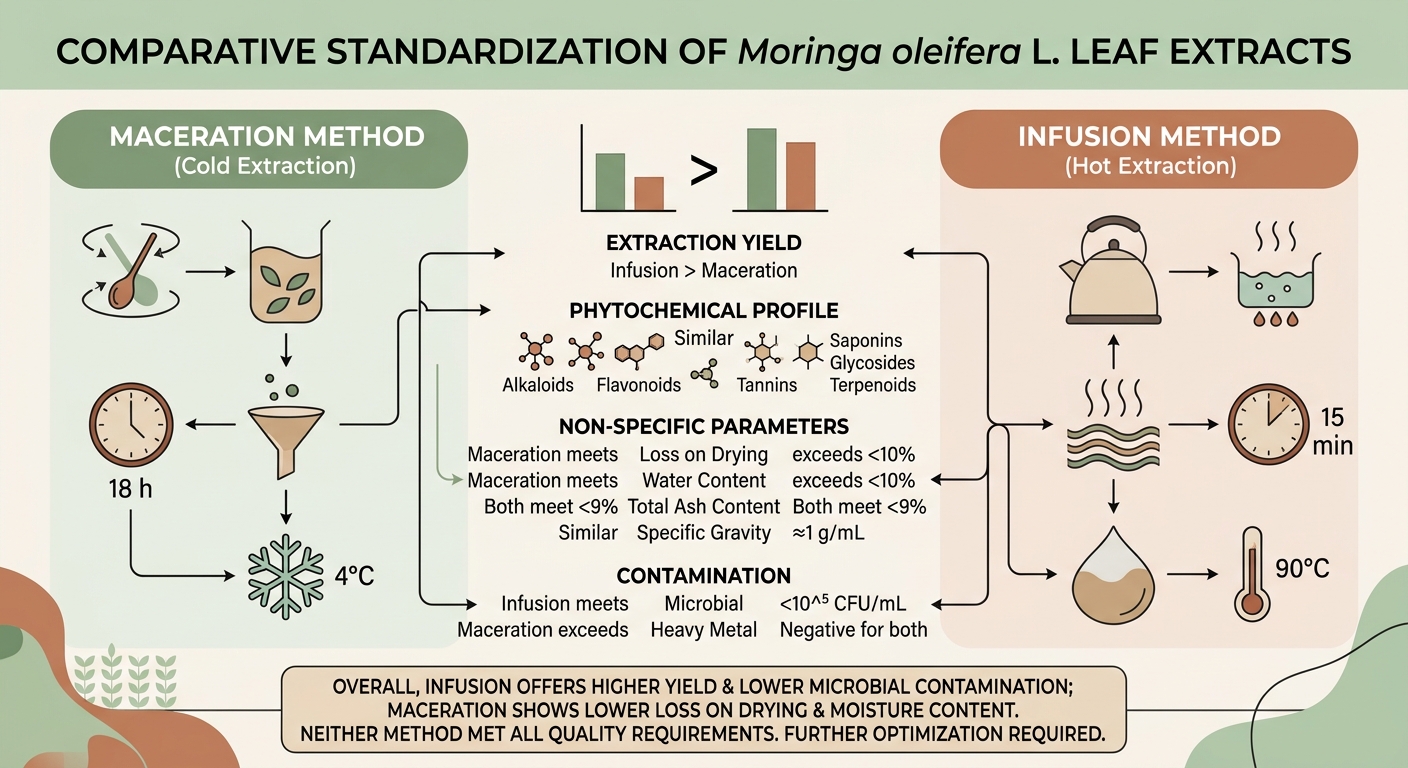
Herbal plants traditionally used to treat various diseases and serves as basis for modern drug development. The traditional medicines in Indonesia must meet safety, quality, and efficacy standards, including extract standardization and screening phytochemical. Pharmaceutical industry activities are closely related to implementation of standardization, from raw materials to finished product, in order to ensure efficacy, batch-to-batch consistency, stability, and safety. This study aims to support the utilization of Indonesia herbal plants, particularly moringa leaf. The extract evaluation must be qualified through phytochemical screening and standardization tests. The screening phytochemical result showed both methods contained alkaloids, flavonoids, tannins, saponins, terpenoids, and glycosides. Organoleptically, both extract exhibited similar characteristics besides infusion extract showing a more intense color. The water-soluble extractive values of maceration and infusion methods were 63.95% and 64%. Most non-specific parameters were within the specified limits, including loss on drying (9,07% and 10,23%), specific gravity (1,017 g/mL and 1,007g/mL), total ash content (6,08% and 7,1%), moisture content (9,40% and 10,82%), heavy metal contaminations were negative, while microbial contaminations were at 1,2 x 10⁵ CFU/mL and 3,35 x 10² CFU/mL. Overall, both maceration and infusion methods produced M. oleifera extracts with similar phytochemical profiles and fulfilled most of the evaluated standardization parameters. Infusion produced a higher extraction yield and lower microbial contamination, whereas maceration showes lower moisture content and loss on drying values. However, neither method met all quality requirements nor considered superior overall based on the parameters evaluated, and further optimization is required to obtain a better extract standardization result.
Downloads
Published
How to Cite
Issue
Section
License
Copyright (c) 2026 Amalina Fakhriah, Varda Arianti, Yolanda Ongkowidjaya, Ika Aulia Rahmi

This work is licensed under a Creative Commons Attribution-ShareAlike 4.0 International License.